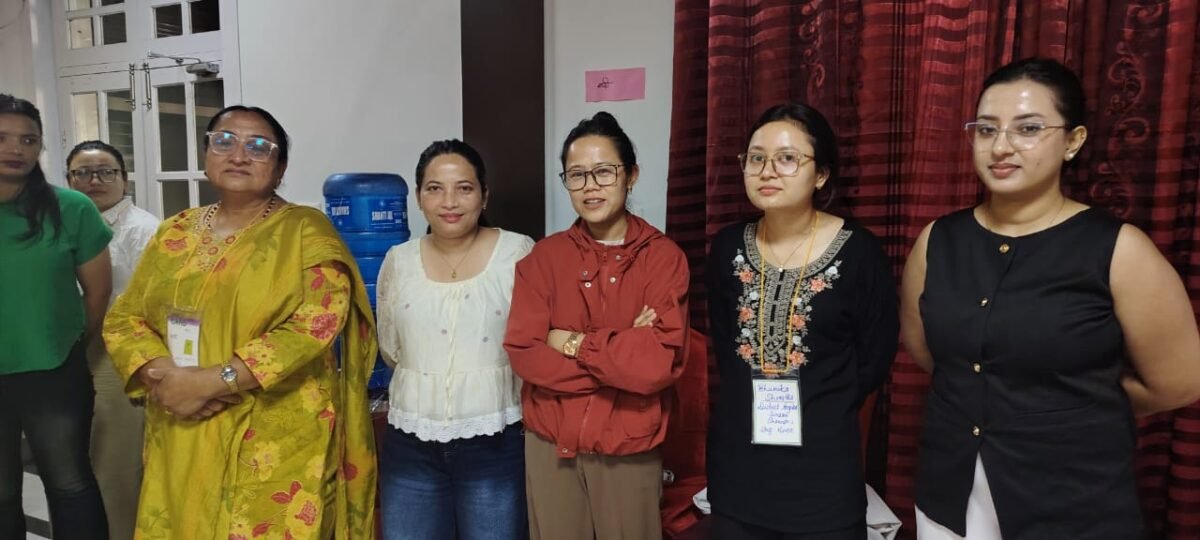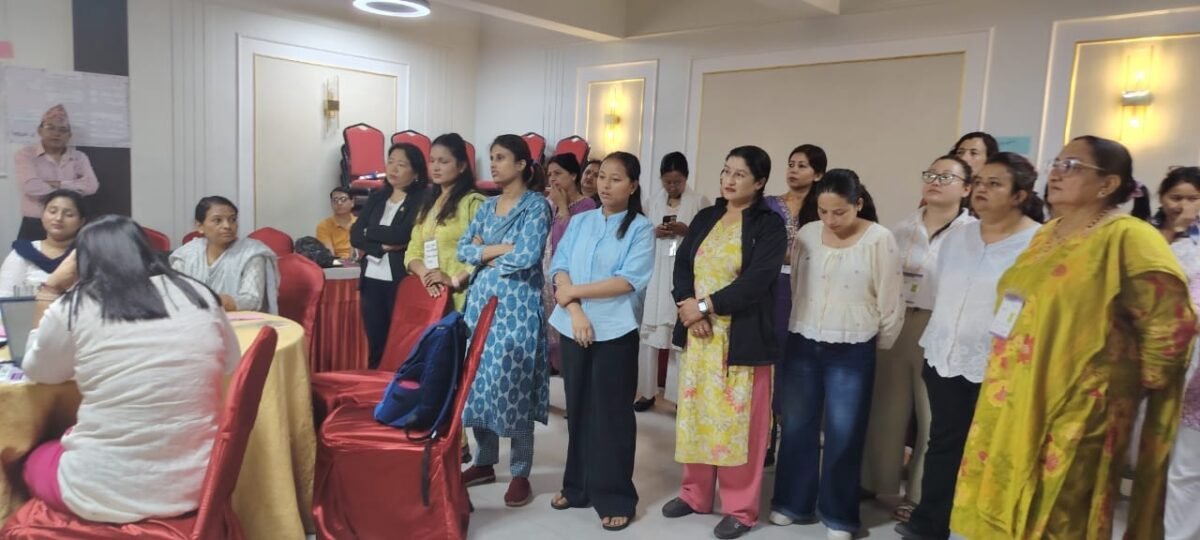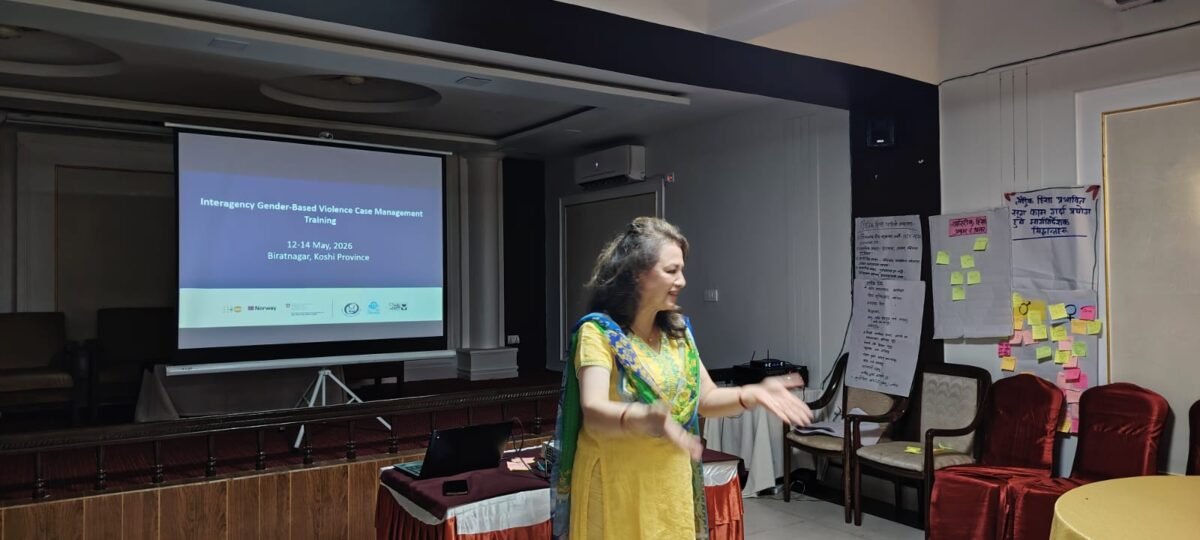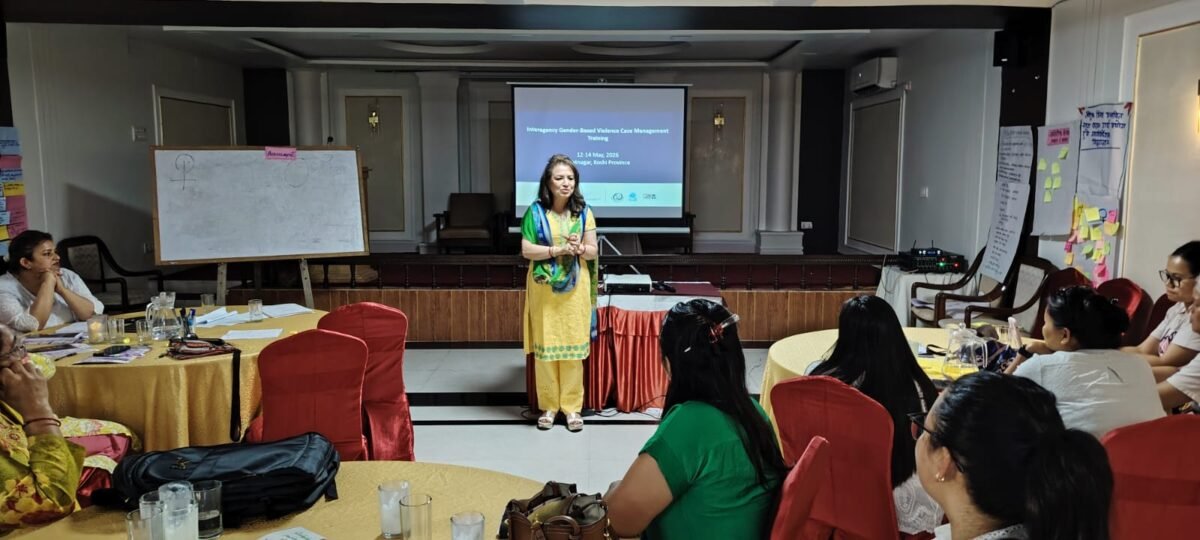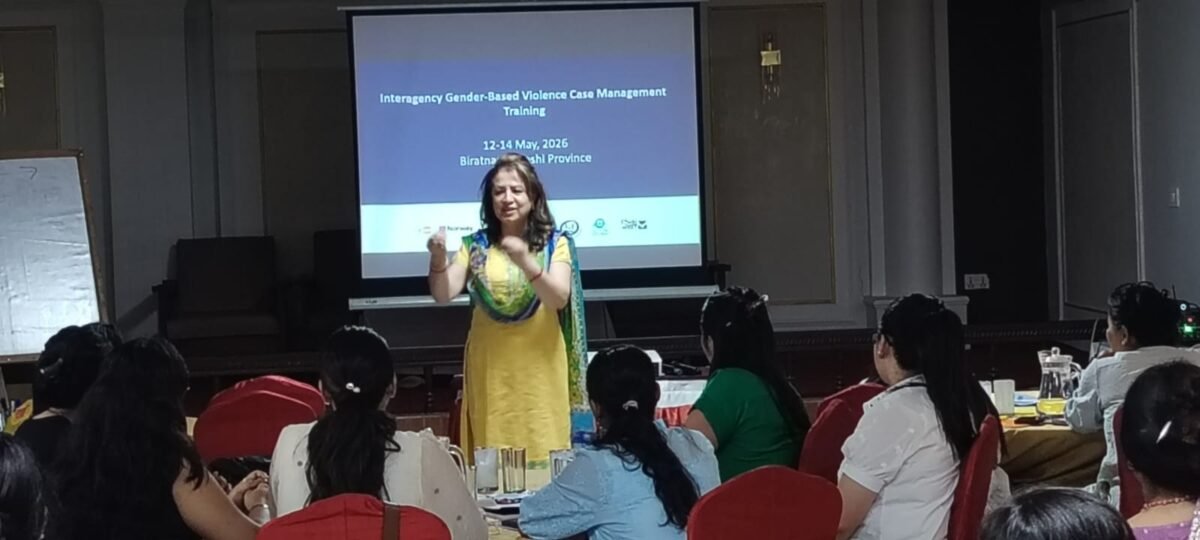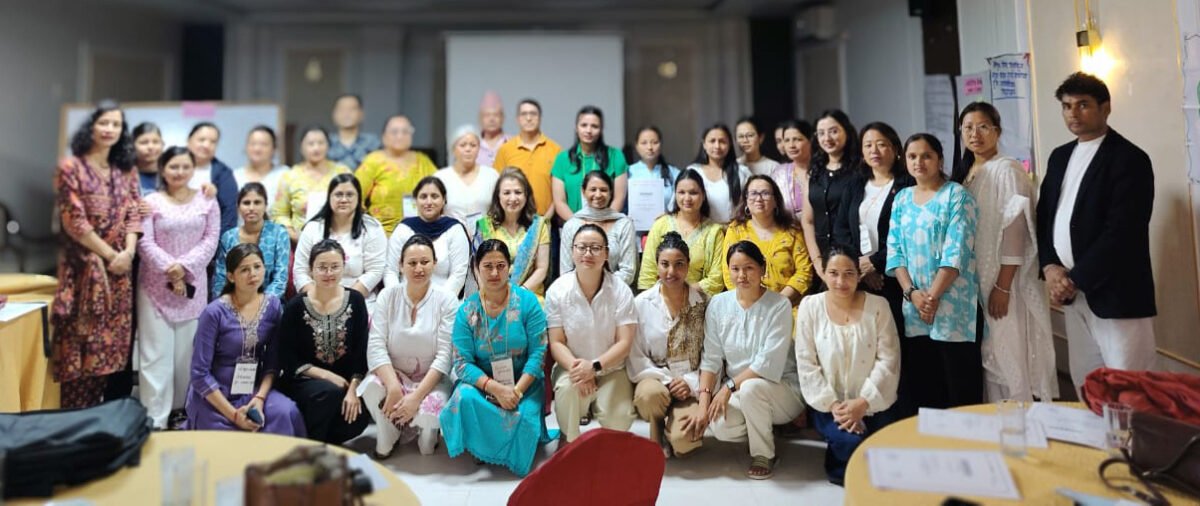
May 14, 2026, Biratnagar – Saathi, under the GBVPR II Project with the support of United Nations Population Fund, successfully conducted a three-day GBV Case Management Training in Biratnagar from 12–14 May 2026. The training brought together focal persons from all districts of Koshi Province, representatives from safe houses, Community Psychosocial Workers (CPSWs), Nepal Police, psychosocial counsellors, and District Bar Associations with the objective of strengthening survivor-centered GBV response services and coordination mechanisms.
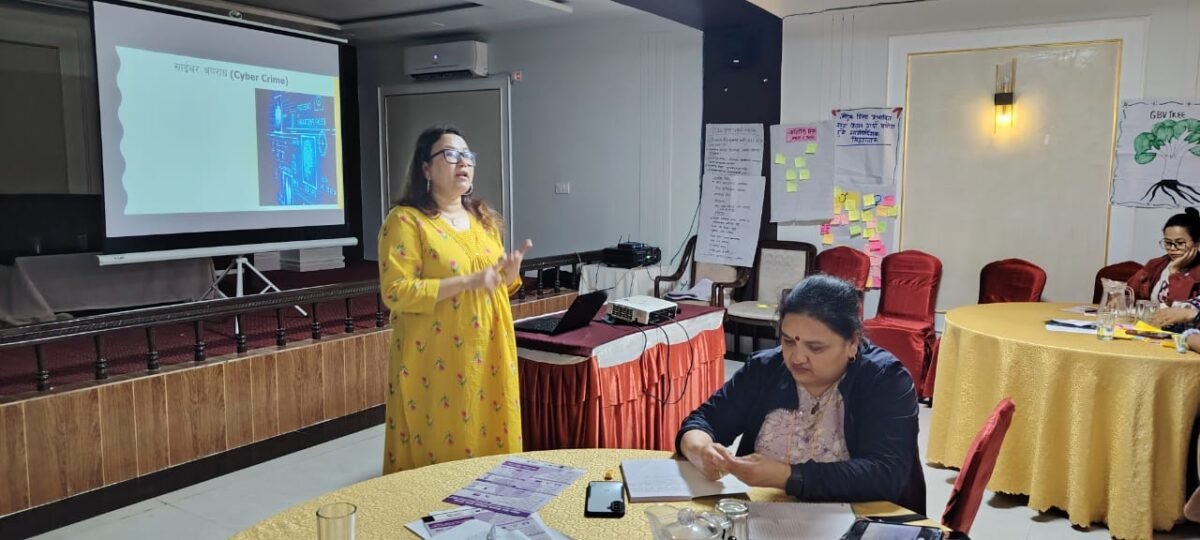
During the inaugural session, Ms. Durga Bhandari Baral, Assistant Secretary at the Ministry of Social Development, Koshi Province, highlighted the ministry’s ongoing initiatives on gender equality and women’s empowerment. She emphasized the importance of strengthening quality support services for survivors and encouraged all participants to effectively apply the knowledge and skills gained through the training in their respective workplaces and communities.
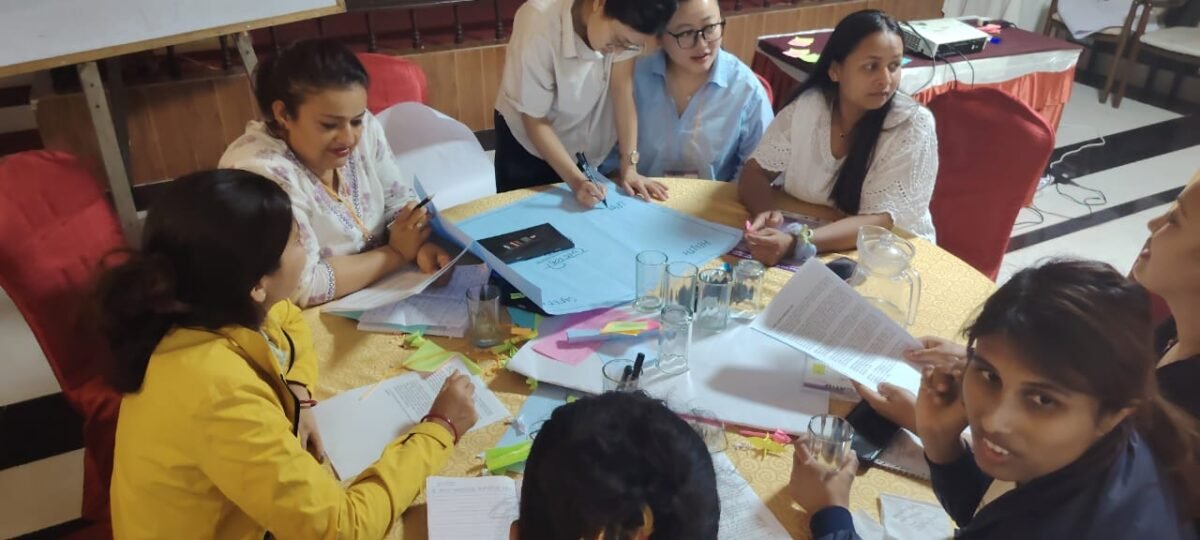
The training covered key aspects of GBV case management, including survivor-centered approaches, guiding principles, communication skills, documentation, referral pathways, psychosocial support, trauma-informed care, and inter-agency coordination among service providers. Through group exercises, case discussions, and practical learning sessions, participants strengthened their understanding of ethical and effective case management practices.
Participants reflected that the training helped them deepen their understanding of survivor-centered response and improved their confidence in handling GBV cases more sensitively and professionally. Many participants shared that the sessions on communication skills, trauma-informed approaches, and referral mechanisms were particularly useful for their day-to-day work. They also appreciated the opportunity to learn from the experiences of service providers from different districts and institutions, which helped strengthen coordination and networking among stakeholders working on GBV prevention and response.
During the closing ceremony, Ms. Bandana Rana, UN CEDAW Committee member appreciated the commitment and critical role played by frontline service providers in supporting survivors of violence and strengthening access to justice and protection services. She emphasized the importance of coordinated, accountable, and survivor-centered service delivery systems to ensure dignified and quality support for women and girls affected by violence.